
A Comprehensive Guide to Importing Vehicles & Goods to The Bahamas
Navigate import regulations, customs duties, and vehicle shipping to The Bahamas. Learn about VAT rules, restricted items, and essential documentation for a smooth import process.
Navigating Import Regulations in The Bahamas: A Guide for Importers and Trade Professionals
The Bahamas, with its strategic location and vibrant economy, offers significant opportunities for importers and exporters. However, successfully navigating the country's import regulations requires a clear understanding of customs duties, VAT, restricted items, shipping methods, documentation, and trade rules. This comprehensive guide is designed to educate importers, exporters, and trade professionals on the essential aspects of trade with The Bahamas.
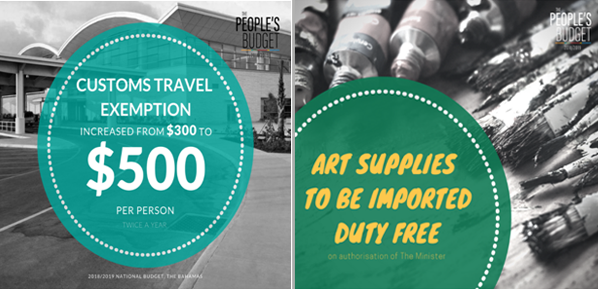
Image Source: Bahamas Customs Department
Understanding General Import Procedures in The Bahamas
The Bahamas Customs Department is the primary agency responsible for collecting duties and taxes on imported goods. The country is transitioning towards a VAT-based economy, impacting overall taxation. All imported goods must be formally entered for home consumption, warehousing, temporary admission, or transshipment. Declarations must be made electronically or in writing within five days (excluding Sundays and public holidays) of discharge by the owner or an authorized agent. Full particulars, supported by documentary evidence, are required.
The Click2Clear System
The Bahamas operates an electronic entry system called Click2Clear (C2C), which simplifies trade processes by providing 24/7 access to government services. While businesses can register as importers, individuals typically need to use a licensed customs broker to submit declarations electronically on their behalf. This system aims to modernize customs operations, although physical inspection by customs officers remains a possibility.
Customs Duties, VAT, and Other Taxes in The Bahamas
When importing goods to The Bahamas, several taxes and fees apply. Understanding these is crucial for accurate cost estimation.
Duty Calculation and VAT Rules
- Customs Duties: Rates vary significantly based on the product category, typically ranging from 5% to 45% or more. Duty is primarily charged on the Transactional Value (Price Actually Paid or Payable) or, if unavailable, based on identical or similar goods, or computed value.
- Value Added Tax (VAT): A 12% VAT is applied to most imported goods and services. VAT is calculated on the total landed cost, which includes the Cost, Insurance, Freight (CIF) value, plus the customs duty, processing fees, storage, and environmental levy. For example, if goods valued at CIF $1,000 have a duty of $200, the VAT would be 12% of $1,200 ($1,000 CIF + $200 Duty), equating to $144.
Environmental Levy and Processing Fees
- Environmental Levy: An additional fee imposed to assist with the disposal of hazardous items, applicable to items like vehicles, electronics, and lead-acid batteries. For motor vehicles, the levy applies to all, with specific rates for antique/vintage vehicles.
- Processing Fee: A fee of 1% of the CIF value, with a minimum of $10 and a maximum of $500.
Exemptions and Concessions
The Bahamian government offers various exemptions and concessions to encourage development and attract investment. These may include:
- Hotels Encouragement Act (HEA): Provides duty-free entry for approved materials and equipment used in hotel and tourism-related development and expansion. Requires official approval from the Ministry of Tourism or Bahamas Investment Authority.
- Heads of Agreement (HOA): For large-scale projects, an HOA can stipulate special tariff exemptions, often negotiated between major investors and the Government.
- Family Island Development Encouragement Act: Offers duty-free building materials for approved projects on designated Family Islands.
- Returning Residents: Bahamian citizens or permanent residents returning after two or more consecutive years abroad may be entitled to a general exemption on household effects (up to $10,000 in value) and one vehicle (up to $30,000 in value), not more than once every five years.
- Personal/Non-Commercial Goods: Goods in personal baggage of passengers may be exempt from duties and taxes if they are non-commercial and within duty-free allowances ($500 twice per calendar year for Bahamians/residents; $100 per trip for bona fide visitors). Prohibited and restricted goods are excluded.
Importing Vehicles to The Bahamas
Importing vehicles, including car shipping to Bahamas, has specific regulations:
Vehicle Age Restrictions and Special Permissions
The importation of motor vehicles is generally restricted to vehicles less than ten years old from the date of manufacture. For vehicles older than ten years, special permission must be granted in advance by the Ministry of Finance, and an applicable environmental levy of 20% of the landed cost may apply. Antique/vintage vehicles older than ten years require prior Ministry of Finance approval and incur a $200 environmental levy.
Required Vehicle Documentation
For vehicles to be processed and entered, the following documents are required:
- Conditional Report: Documenting the condition of the vehicle.
- Proof of Purchase/Ownership: In the form of an Invoice and Title.
- Proof of Importation: Bill of Lading and Freight Invoice.
Motor vehicles with "Certificates of Destruction" or salvage/non-rebuildable titles are PROHIBITED from import.
Vehicle Valuation
The Bahamas Customs and Excise Department values all goods, including vehicles, based on a tiered principle:
- Transactional Value: The Price Actually Paid or Payable (PAPP) is the primary valuation method.
- Transactional Value of Identical Goods: If PAPP is unclear, research into market prices for identical goods is conducted.
- Transactional Value of Similar Goods: If identical values cannot be determined, values from similar goods are used.
- Deductive Value: Based on the value per unit of the complete shipment.
- Computed Value: Calculating costs, charges, and expenses incurred in production.
Restricted and Prohibited Items in The Bahamas
Certain items are either restricted (requiring permits/licenses) or strictly prohibited from being imported to The Bahamas:
- Prohibited Items: Counterfeit currency/goods, indecent/obscene materials, certain goat hair products, underwater guns (excluding Hawaiian Slings), infected animals/animal products, meat/food unfit for human consumption, specific chemicals (e.g., Sodium fluoroacetate '1080', LSD), dredges for sponging.
- Restricted Items (requiring permits/licenses): Pets (Dept. of Agriculture), firecrackers (Comptroller approval), trailers used as living quarters/offices (Minister authorization), mechanical coin-operated games (valid license), goods for business purposes (Business License), certain chemicals, firearms and ammunition (Commissioner of Police approval), poultry, meats, vegetables, fruits, live plants, and animals (Ministry of Agriculture, Marine Resources and Family Island Affairs), medicines and pharmaceuticals (Ministry of Health and Wellness), liquid or Liquified Petroleum Gas (Ministry of the Environment and Natural Resources – requires certificate of safe transport/storage, not an import license).
Shipping Methods to The Bahamas
Choosing the right shipping method for importing goods to Bahamas depends on urgency, size, and budget.

Image Source: LinkedIn Article by Herbie Key
Air Freight
- Advantages: Fastest option for urgent or small shipments, typically 3-5 days from the U.S.
- Disadvantages: Higher cost, volume/weight limitations.
- Documents: Air Waybill serves as proof of freight and shipping details.
Sea Freight
- Advantages: Most cost-effective for bulk goods, large items like vehicles, or heavy equipment. Can be shipped in Full Container Loads (FCL) or Less-than-Container Loads (LCL).
- Transit Times: From Florida to Nassau can be 3-7 days of sailing, but total time including consolidation and customs can extend to 1-2 weeks. Shipping to outlying islands may add extra transit.
- Documents: Bill of Lading is required as proof of freight and shipping details and to claim goods.
Courier Services (Door-to-Door)
- Advantages: International couriers handle the entire process, including customs clearance for smaller parcels, offering door-to-door convenience typically within 2-5 days.
- Disadvantages: Higher cost per pound than freight.
Available Vehicle Models and Variants
Below is a comprehensive list of available vehicle models and their variants from Toyota and Ford. This list is provided for your convenience when considering vehicle imports.
| Make | Model | Variant |
|---|---|---|
| Ford | Everest | 2.0L Turbo Trend 4x2 6AT |
| 2.0L Turbo Sport 4x2 6AT | ||
| 2.0L Turbo Sport 4x2 6AT (Special Edition) | ||
| 2.0L Bi-Turbo Titanium+ 4x2 10AT | ||
| 2.0L Bi-Turbo Titanium+ 4x4 10AT | ||
| 2.0L Bi-Turbo Wildtrak 4x4 10AT | ||
| 3.0L V6 Turbo Platinum 4WD 10AT | ||
| Ford | Ranger | Standard Cab XL 2.0L Turbo 4x4 6MT |
| Open Cab XL+ 2.0L Turbo HR 6MT | ||
| Open Cab XLS 2.0L Turbo HR 6AT | ||
| Double Cab XLS 2.0L Turbo HR 6AT | ||
| SWB 2.0L Bi-Turbo 4x4 10AT | ||
| Double Cab Sport 2.0L Turbo HR 6AT | ||
| Double Cab Sport 2.0L Turbo 4x4 6AT | ||
| Double Cab Wildtrak 2.0L Turbo HR 6AT | ||
| Double Cab Wildtrak 3.0L V6 Turbo 4WD 10AT | ||
| Double Cab Stormtrak 2.0L Bi-Turbo HR 10AT | ||
| Double Cab Stormtrak 2.0L Bi-Turbo 4x4 10AT | ||
| Double Cab Raptor 2.0L Bi-Turbo 4WD 10AT | ||
| Double Cab Raptor 3.0L V6 Twin-Turbo EcoBoost 4WD 10AT | ||
| Toyota | Hilux Champ | 2.4 Diesel AT SWB Attractive Package |
| 2.4 Diesel AT LWB | ||
| 2.4 Diesel AT C&C SWB | ||
| 2.4 Diesel MT LWB | ||
| 2.4 Diesel MT C&C LWB | ||
| 2.7 Gasoline AT SWB | ||
| 2.7 Gasoline AT C&C SWB | ||
| 2.0 Gasoline MT SWB | ||
| Toyota | Yaris ATIV | Premium Luxury |
| NIGHTSHADE | ||
| Premium | ||
| Smart | ||
| Sport | ||
| Toyota | Yaris | Premium S |
| Premium | ||
| Smart | ||
| Sport | ||
| Toyota | Hilux Revo Standard Cab | 4x4 2.8 Entry AT |
| 4x4 2.8 Entry | ||
| 4X2 2.8 Entry | ||
| 4X2 2.4 Entry AT | ||
| 4x2 2.4 Entry | ||
| 4x2 2.4 Entry Short Wheelbase | ||
| 4x2 2.4 Entry (Cab & Chassis) | ||
| 4x2 2.4 Entry AT (Cab & Chassis) | ||
| Toyota | Hilux Revo Z Edition | Double Cab Z Edition 4x2 2.4 Mid AT |
| Double Cab Z Edition 4x2 2.4 Mid | ||
| Double Cab Z Edition 4x2 2.4 Entry AT | ||
| Double Cab Z Edition 4x2 2.4 Entry | ||
| Smart Cab Z Edition 4x2 2.4 Mid AT | ||
| Smart Cab Z Edition 4x2 2.4 Mid | ||
| Smart Cab Z Edition 4x2 2.4 Entry AT | ||
| Smart Cab Z Edition 4x2 2.4 Entry | ||
| Toyota | Hilux Revo Prerunner & 4x4 | Double Cab 4x4 2.8 High AT |
| Double Cab 4x4 2.8 High | ||
| Double Cab 4x4 2.4 Mid | ||
| Double Cab Prerunner 2x4 2.4 High AT | ||
| Double Cab Prerunner 2x4 2.4 High | ||
| Double Cab Prerunner 2x4 2.4 Mid AT | ||
| Double Cab Prerunner 2x4 2.4 Mid | ||
| Double Cab Prerunner 2x4 2.4 Entry AT | ||
| Double Cab Prerunner 2x4 2.4 Entry | ||
| Smart Cab 4x4 2.8 High | ||
| Smart Cab 4x4 2.4 Mid | ||
| Smart Cab Prerunner 2x4 2.4 Mid AT | ||
| Smart Cab Prerunner 2x4 2.4 Mid | ||
| Smart Cab Prerunner 2x4 2.4 Entry AT | ||
| Smart Cab Prerunner 2x4 2.4 Entry | ||
| Yaris ATIV Nightshade | ||
| Toyota | Yaris Cross | HEV Premium Luxury |
| HEV Premium | ||
| HEV Smart | ||
| Toyota | Veloz | Premium |
| Smart | ||
| Toyota | Corolla Altis | HEV Premium |
| 1.8 Sport | ||
| 1.6G | ||
| Toyota | Hilux Revo GR Sport | Double Cab 4x4 2.8 GR Sport AT |
| Double Cab 4x4 2.8 GR Sport AT Base Model | ||
| Double Cab 4x2 2.8 GR Sport AT | ||
| Toyota | Corolla Cross | HEV Premium Luxury |
| HEV Premium | ||
| 1.8 Sport Plus | ||
| Toyota | Hilux Revo Rocco | Double Cab 4x4 2.8 Rocco AT |
| Double Cab Prerunner 2x4 2.4 Rocco AT | ||
| Smart Cab 4x4 2.8 Rocco AT | ||
| Smart Cab Prerunner 2x4 2.4 Rocco AT | ||
| Toyota | Hiace | Hiace GL AT |
| Hiace GL MT | ||
| Hiace Eco MT | ||
| Toyota | Corolla Altis GR Sport | HEV GR Sport |
| Toyota | Fortuner Leader | 2.4 Leader V 4WD |
| 2.4 Leader V | ||
| 2.4 Leader G | ||
| 2.4 Leader S | ||
| Toyota | Corolla Cross GR Sport | HEV GR Sport |
| Toyota | Commuter | Diesel 2.8 AT |
| Diesel 2.8 MT | ||
| Toyota | Innova Zenix | 2.0 HEV Premium |
| 2.0 HEV Smart | ||
| Toyota | CAMRY | HEV Premium Luxury |
| HEV Premium | ||
| HEV Smart | ||
| Toyota | Fortuner Legender | 2.8 Legender 4WD |
| 2.8 Legender | ||
| 2.4 Legender 4WD | ||
| 2.4 Legender | ||
| Toyota | Coaster | Coaster |
| Toyota | Fortuner GR Sport | 2.8 GR Sport 4WD |
| Toyota | Majesty | Grande |
| Premium | ||
| Toyota | GR Yaris | GR Yaris |
| Toyota | GR Corolla | GR Corolla |
| Toyota | Alphard | Alphard 2.5 HEV Luxury |
| Alphard 2.5 HEV | ||
| Vellfire 2.5 HEV |
How to Buy a Vehicle from Pace Motors Thailand
For those interested in importing a vehicle from Thailand, Pace Motors offers a streamlined purchasing process:
- Contact Pace Motors Thailand: Reach out via WhatsApp or email to initiate your inquiry.
- Select Your Vehicle: Choose your desired vehicle model and variant from the comprehensive list of available models provided above.
- Send Payment: Facilitate the payment through an International bank transfer (TT).
- Receive Your Car and Documents: Upon successful payment and processing, receive your chosen vehicle along with all necessary export and import documents.

Image Source: Visacent.com
Compliance and Official Resources
Staying compliant with Bahamian trade rules is paramount. Always consult official sources for the most current information, as regulations can change. Key resources include:
- The Bahamas Customs Department Official Website: (bahamascustoms.gov.bs) for general import/export procedures, duties, taxes, downloadable forms, and FAQs.
- Customs Tariff and Duty Rates: Available via the Tariff Search tool on the Customs website.
- Bahamas Laws Online Portal: Provides access to consolidated statutes, including the Customs Management Act and Regulations, Tariff Act, Value Added Tax Act, and various Encouragement Acts.
- Bahamas Trade Information Portal: (bahamastradeinfo.gov.bs) Offers summaries of import procedures and requirements.
- Contacting Customs: For direct assistance, the Customs Department has a Help Desk for Click2Clear and general inquiry contact numbers (e.g., Nassau Headquarters: (242) 604-3124/3125, Email: customs@bahamas.gov.bs).
- Licensed Customs Brokers: The Customs website lists all licensed brokers and freight forwarders, who can be invaluable in navigating complex procedures.
⚠️ This information is based on currently available sources and may be subject to change. Always verify details with official Bahamian customs and government sources or a licensed customs broker before making trade decisions.